
MARCORY HOUSE (2015-2025)
Site. Abdijan, Ivory Coast
Architects. Canales & Lombardero (Francisco González de Canales y Nuria Álvarez Lombardero)
Collaborador. Atma Space & Logan Paine
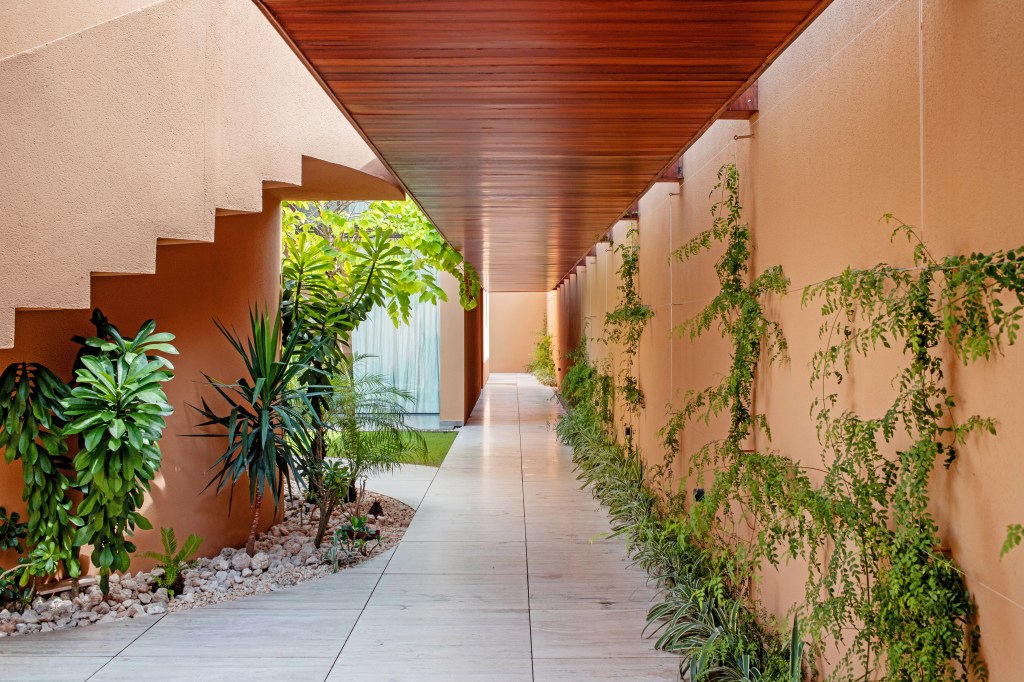
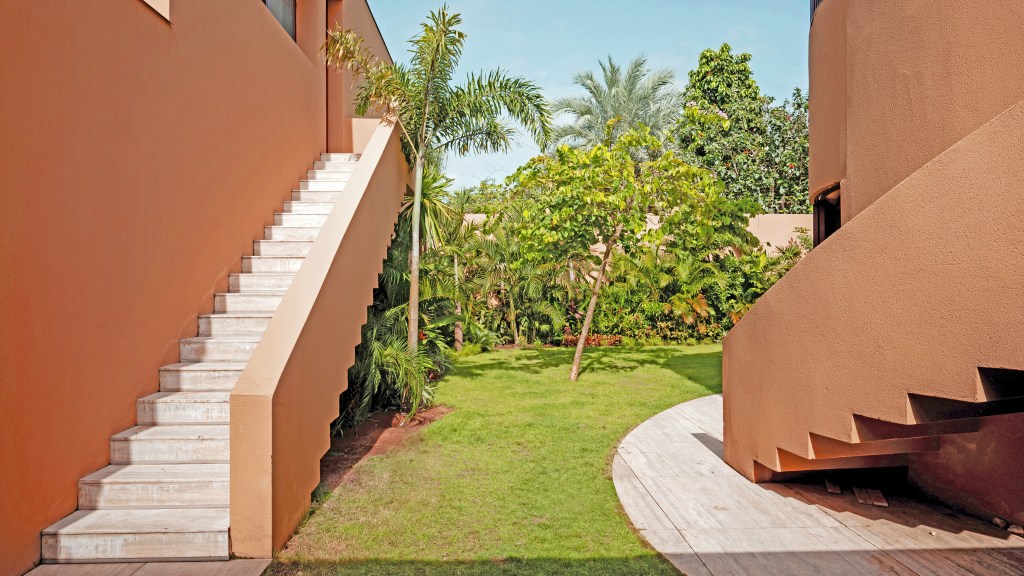
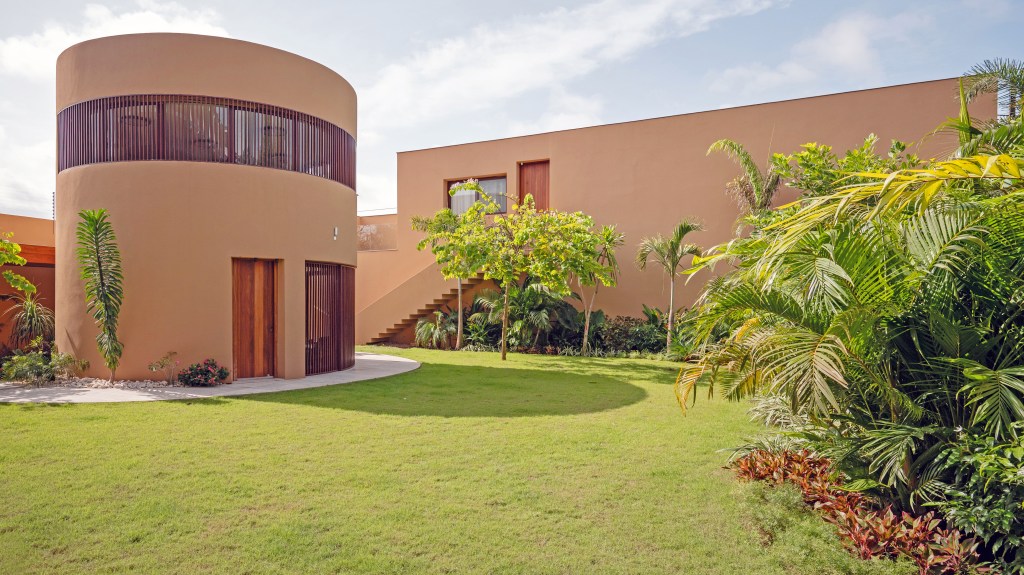
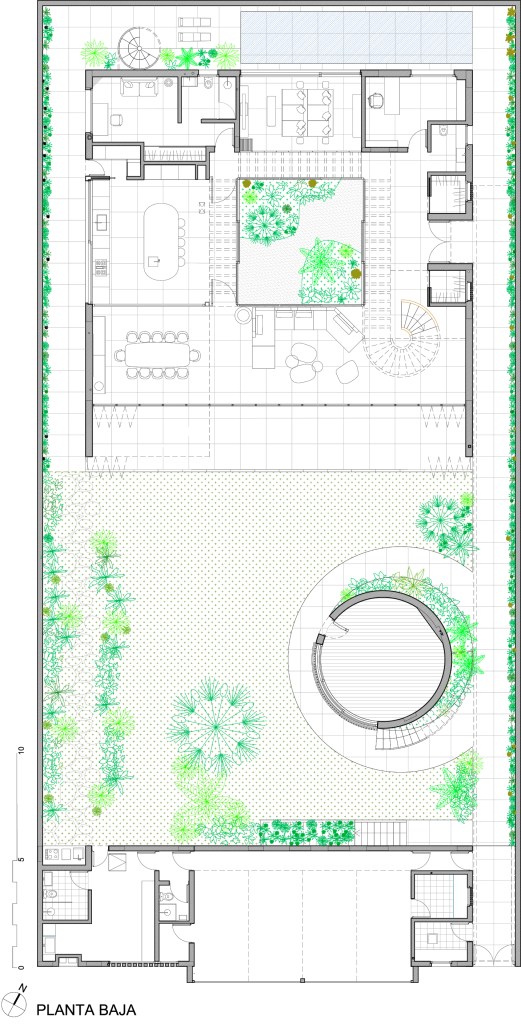
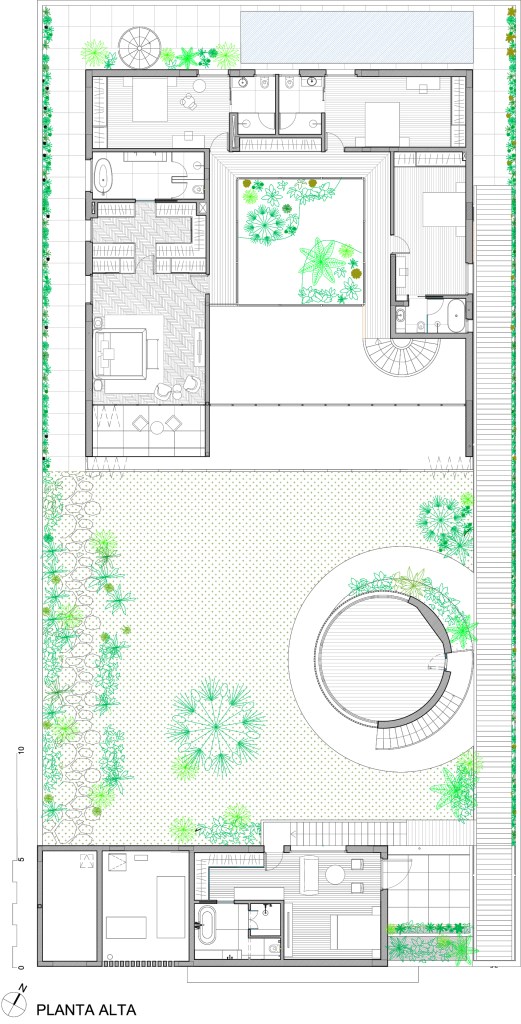
Marcory House is located in a chaotic and disjointed environment, which motivates the dwelling to close itself off from the outside and develop its own internal logic. This introspective organization revolves around three distinct elements within a single enclosed compound. Each corresponds to a clear typology: a courtyard house, an open block resembling a private apartment, and a circular volume dedicated to play and fitness. These volumes are tangentially connected by an entrance canopy, generating interstitial spaces enriched by carefully designed landscaping.
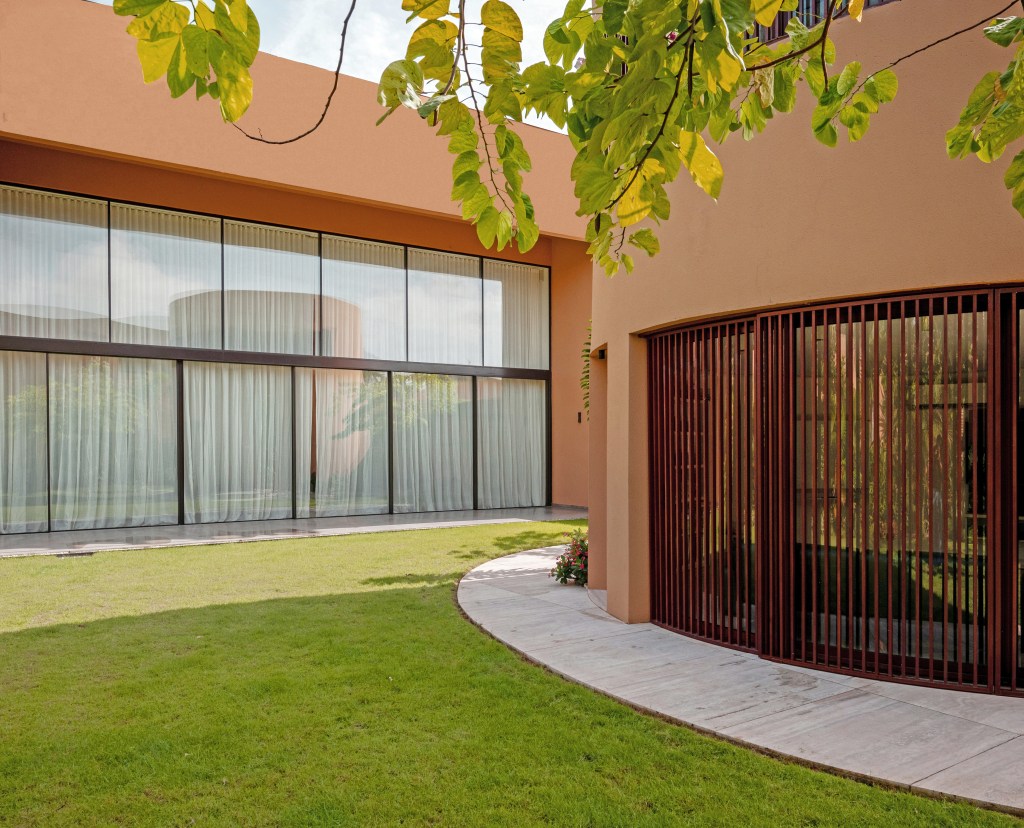
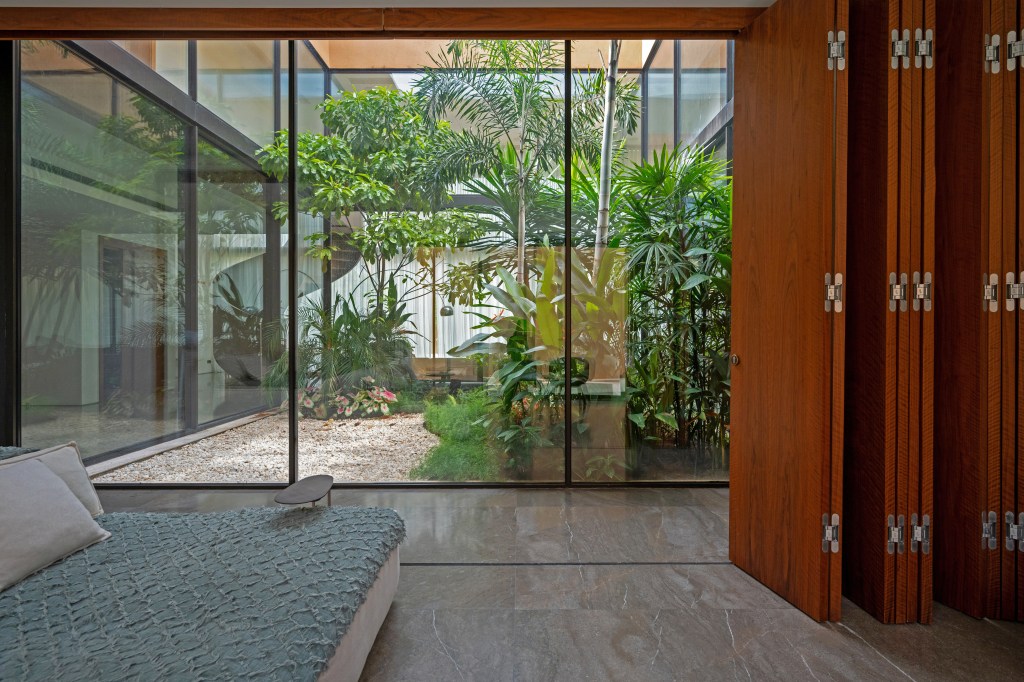
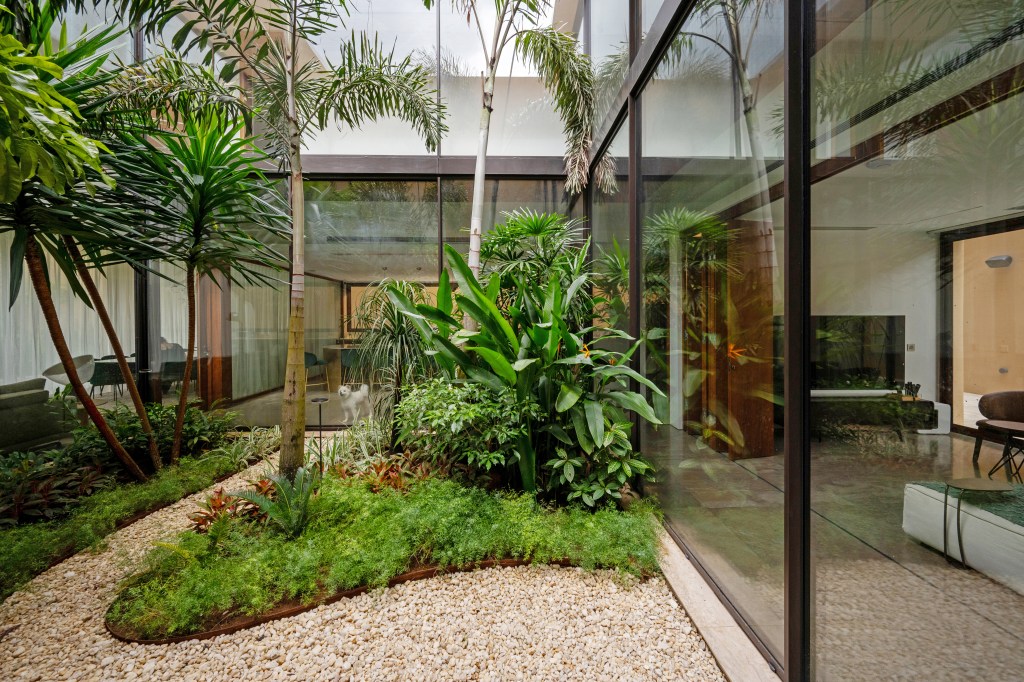
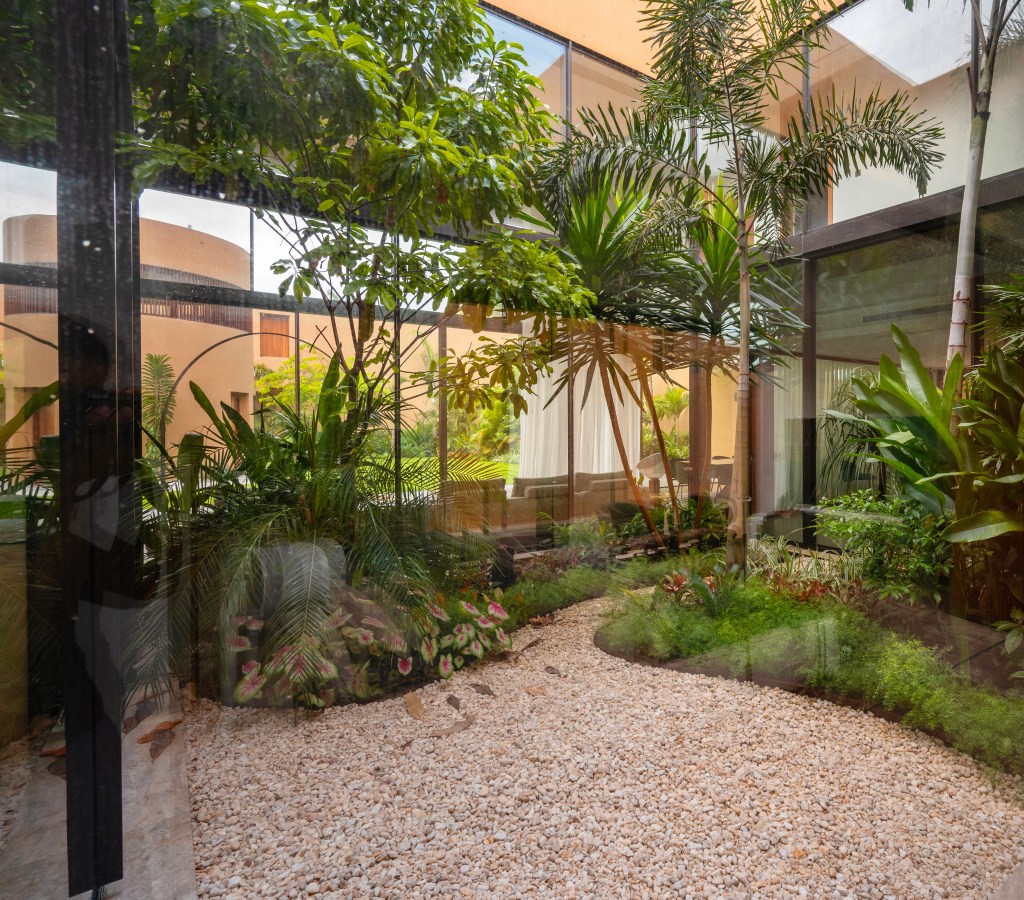
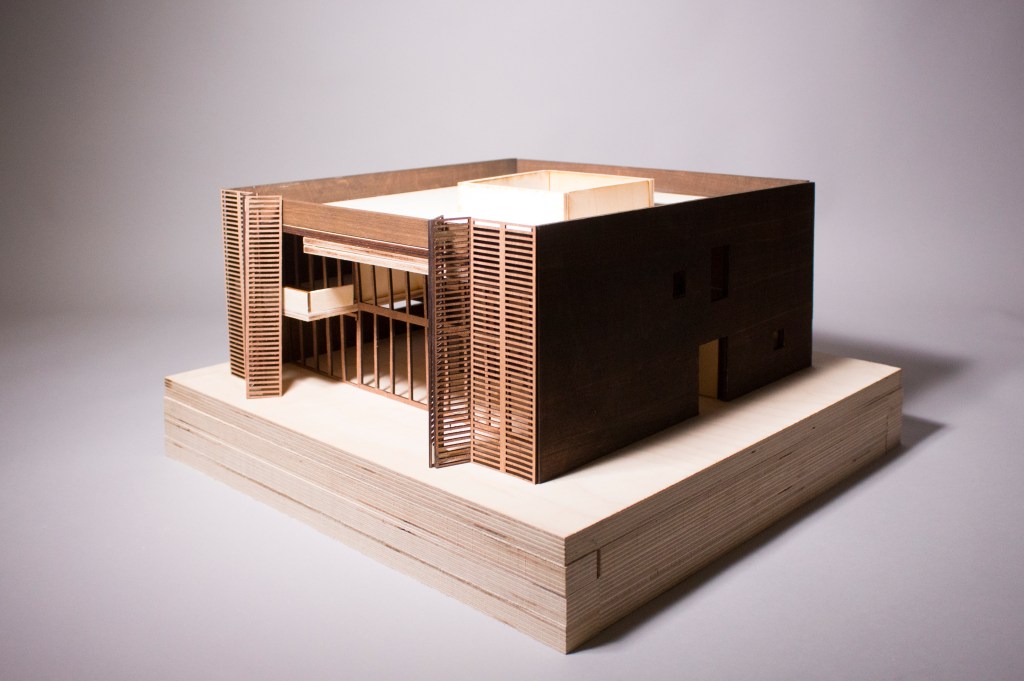
The main volume, which contains most of the program, is the courtyard house. Its strong typological character organizes the domestic functions, with the courtyard serving as the central core. However, this same courtyard—while structurally central—is constantly questioned through the material development of the project. Deep transversal relationships are introduced, such as the connection between opposite façades or between the interior double height and adjacent volumes, softening its dominant character.
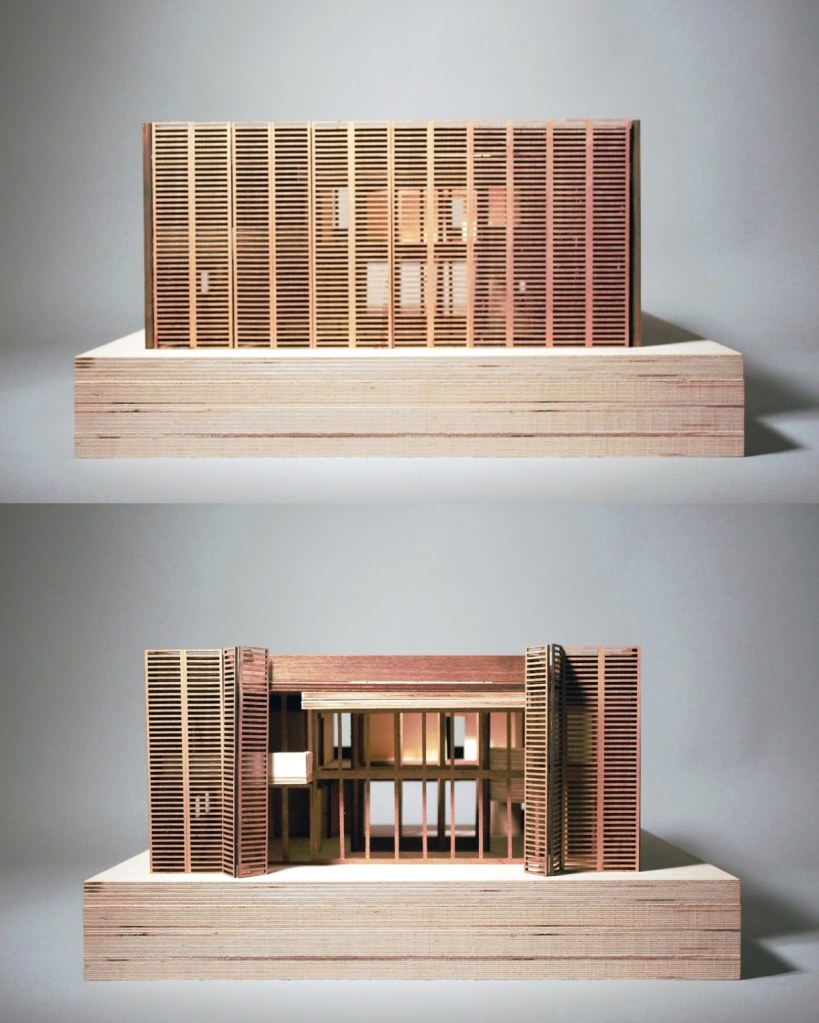
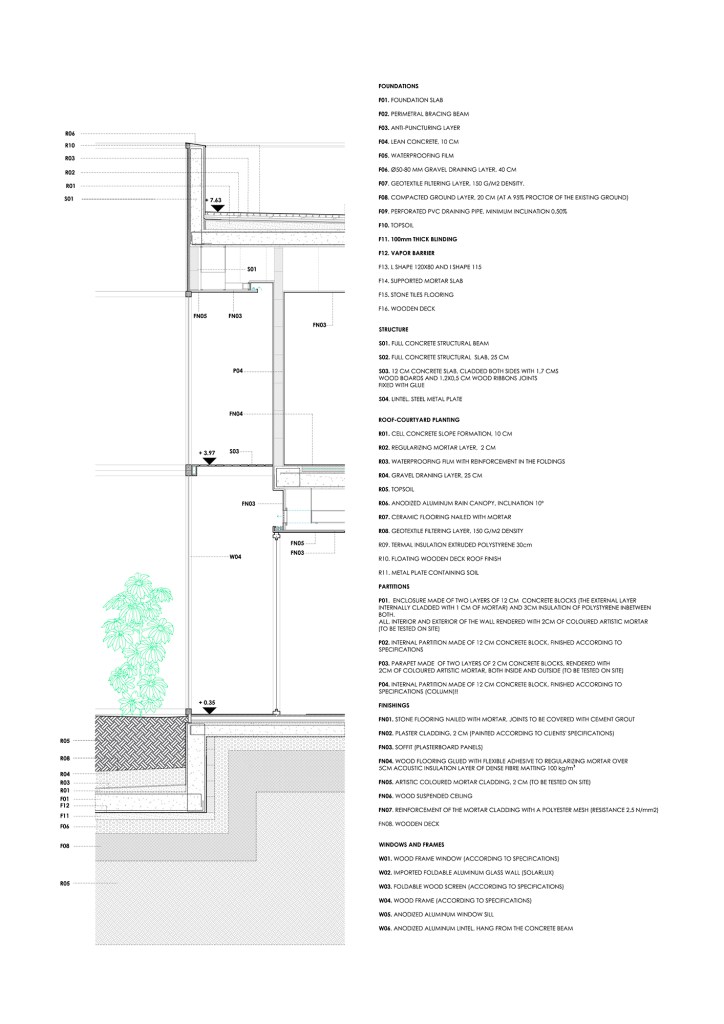
Furthermore, the courtyard is freed from structural responsibilities thanks to a cantilevered construction along the perimeter, where the surrounding corridor projects outward and central supports are eliminated. This perforated corridor allows light to pass through, creating a gradual transition toward the interior and giving the courtyard a lighter presence. Thus, far from being a monolithic element, the courtyard becomes a space of light and vegetation—ambiguous and elusive.
In summary, the project consciously embraces an ambiguity between strong typological reference and a construction that dematerializes it. Through formal, structural, and material strategies, the centrality of the courtyard is maintained but its weight is dissolved, offering a more fluid and subtle spatial experience for its inhabitants.
CLIMATIC STRATEGY
Located in a warm and humid climate, the house promotes multiple cross-ventilations, ensuring continuous natural air circulation as a way to address the main challenge of thermal comfort. Likewise, to help regulate the indoor temperature, the walls are finished with coatings that incorporate local clays, thus maintaining the freshness of the building envelope. From a material standpoint, the use of local wood has also been emphasized, as its performance in this context is more suitable and carries a lower carbon footprint.
 Canales Lombardero Architects